 English
 Cymraeg
About
Children’s Hearings Scotland (CHS) recruits, trains and supports around 2,300 volunteers across Scotland. You may have heard of us being referred to as the Children’s Panel too.
We have a range of volunteer roles including Panel Members who are tribunal decision makers and Panel Practice Advisers who support Quality Assurance. Panel Members may also act as Panel Engagement Leads or Learning Champions who support their local Panel Members.
Our vision, purpose and values
Children’s Hearings Scotland works to a set of National Standards and we make sure that our vision, purpose and values are visible in everything that we do. You can read more about our plans for our work in our Business and Corporate Parenting Plan 2025-2026, Learning Strategy 2024-29, and Strategic Outlook 2024-27.
Our Vision
Our vision is for all infants, children, young people and their families to be safe, loved, and supported to realise their full potential.
Our Purpose
Our purpose is to ensure our hearings make child-centred decisions which respect and protect children’s rights and support them to thrive.
Our strategic themes will deliver our vision through strong principled leadership, resilient systems, effective partnerships and organisational efficacy, all underpinned by our unwavering commitment to our values and delivering our contribution to Scotland’s National Outcomes.
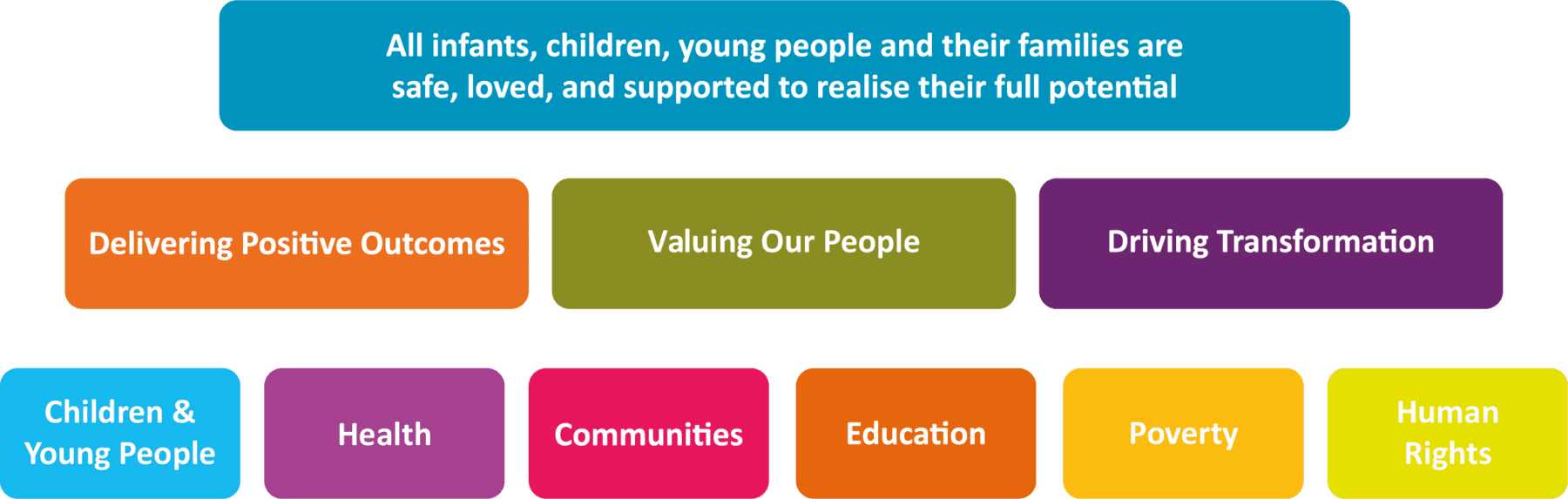
Everything we do is underpinned by our values and we will continue to improve our capability, build our capacity and nurture our culture.
We will uphold children’s rights without fear or prejudice. We will demonstrate independence and integrity by promoting openness, transparency and accountability in all our interactions. We will make decisions based on evidence and we will be honest and transparent about the reasons for them.

Challenging: Not being complacent, but questioning ourselves and others to help us improve.
Child Centred: Making sure everything we do is in the best interests of children and young people.
Creative: Considering innovative and imaginative ways of approaching the issues we face in the work we do.
Respectful: Treating children, young people, their families, partners and each other with care and consideration
Open: Listening, responding to and learning from feedback; acting honestly; ensuring processes are transparent; sharing information and being accountable for our actions and decisions.
Fair: Making sure that everyone is treated with dignity and according to their individual needs; that our information and services are accessible to all; that we provide a consistent level of service to all.